
Indiana Bat (Myotis sodalis) Facts
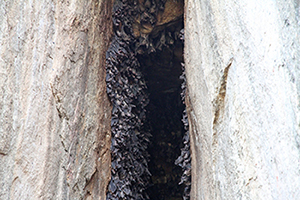
The Indiana Bat (Myotis sodalis) is one of Virginia's cave bats and is found throughout the eastern United States. This species hibernates in large dense colonies of 20,000 to 50,000 bats. Their tendency to cluster tightly in a few key hibernation caves leaves populations vulnerable to habitat disturbance and disease outbreaks, such as White-Nose Syndrome. The Indiana Bat was listed as a federally endangered species in 1967 due to severe population declines caused by human disturbance during winter hibernation.
Indiana Bats are small to medium-sized bats that closely resemble the Little Brown Bat. Their primary distinction lies in color: Indiana Bats feature dull, grayish-chestnut fur with pinkish underparts and smaller hind feet. They weigh between 4.5 and 9.5 grams and measure 1.2 to 2 inches in length.
Indiana Bats are insectivorous, consuming flying insects such as moths, beetles, midges, and mosquitoes. A single Indiana Bat can consume up to 50% of its body weight in insects each evening, providing vital pest control services across Virginia.
Indiana Bats begin congregating at hibernacula (caves and abandoned mines) in late August and September. Females enter hibernation shortly after arriving, while males remain active through late autumn to mate with arriving females. Hibernation occurs from October through April for most populations. Due to their protected endangered status, specialized precautions and legal guidelines must be followed when performing bat exclusions or structural work in areas where Indiana Bats roost.
For more information, visit our Virginia Bat Facts page or contact Xceptional Wildlife at (800) 373-3411 for professional Alexandria Bat Removal services.